Dota 2 Ranks Explained: MMR, Medals and Rank System
Learn every Dota 2 rank in order, the estimated MMR brackets, how Rank Confidence and calibration work, and what changes at Immortal.

Dota 2 has eight rank medals: Herald, Guardian, Crusader, Archon, Legend, Ancient, Divine and Immortal. The first seven are divided into five stars, while Immortal replaces stars with regional leaderboard positions for qualifying players.
Your visible medal is tied to your Matchmaking Rating, or MMR. The system also tracks Rank Confidence, which measures how certain Dota 2 is that your current rating reflects your skill. That distinction matters: MMR estimates your level, while Rank Confidence describes the strength of that estimate.
This guide lists every Dota 2 rank in order, provides practical MMR reference ranges and explains calibration, promotion, demotion and Immortal matchmaking.
Quick answer: Herald begins at the bottom of the ladder, Divine starts at roughly 4,620 MMR, and Immortal begins above the Divine bracket. Exact medal thresholds are not published by Valve as a permanent table, so treat all numerical brackets below as community estimates and check the medal displayed in your Dota 2 client.
All Dota 2 Ranks and MMR Brackets
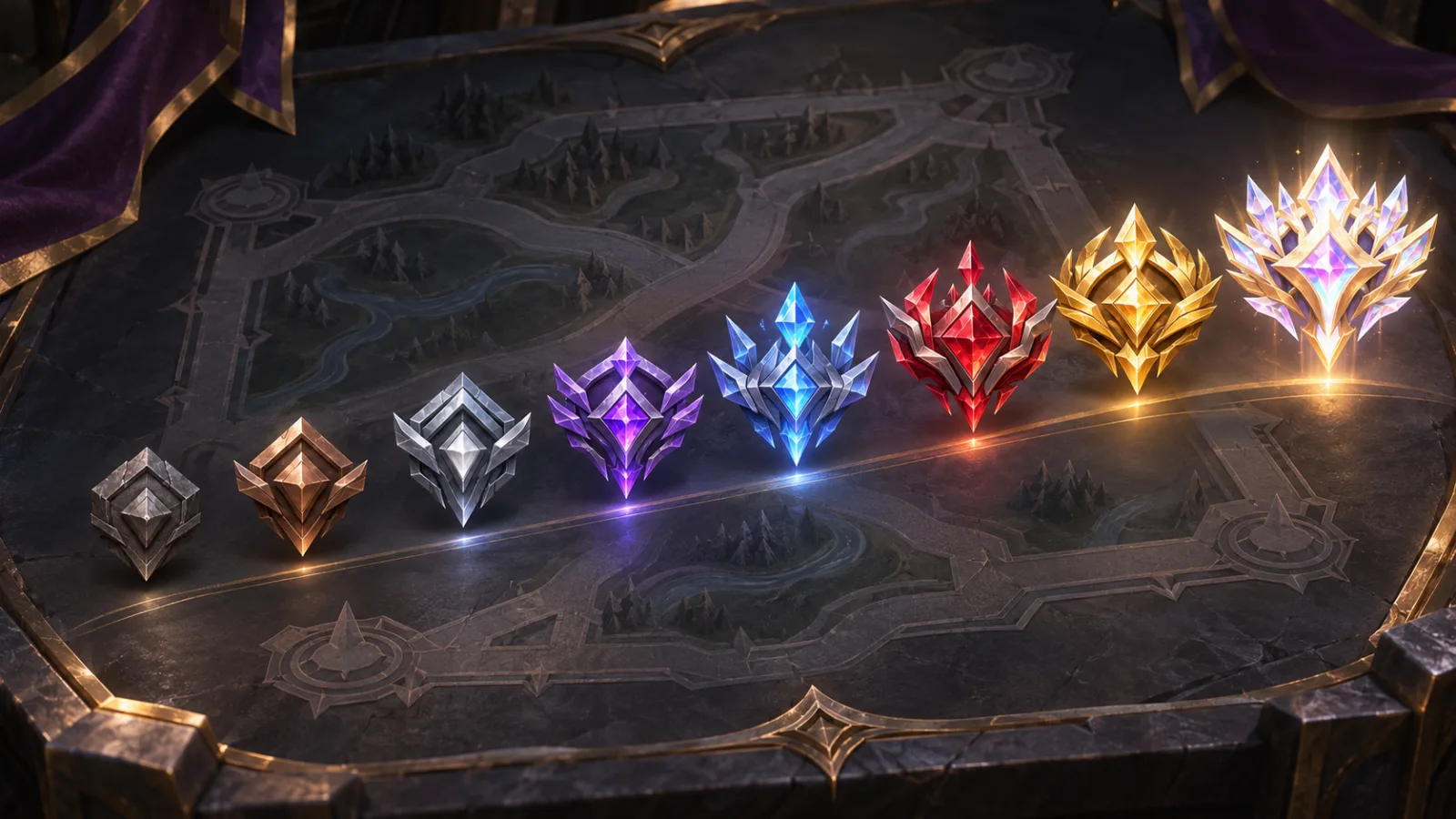
The following table is a practical reference for converting MMR into a medal. Valve can adjust matchmaking, and the client remains the source of truth for your account.
| Rank | Stars | Estimated MMR range |
|---|---|---|
| Herald | 1-5 | 0-769 |
| Guardian | 1-5 | 770-1,539 |
| Crusader | 1-5 | 1,540-2,309 |
| Archon | 1-5 | 2,310-3,079 |
| Legend | 1-5 | 3,080-3,849 |
| Ancient | 1-5 | 3,850-4,619 |
| Divine | 1-5 | 4,620 and above until Immortal placement |
| Immortal | No stars | Above Divine; entry and leaderboard cutoffs can move |
The lower six medals generally progress in steps of about 154 MMR per star in commonly used community tables. Divine uses wider estimated steps of about 200 MMR. The last Divine band is best treated as open-ended because Valve does not maintain a public, fixed promotion table for the Immortal boundary.
Dota 2 Ranks in Order
From lowest to highest, the full medal order is:
- Herald: the first visible medal and the bottom of the ranked ladder.
- Guardian: the second medal, covering players moving beyond the initial bracket.
- Crusader: the third medal and the start of the ladder's broad middle section.
- Archon: the fourth medal, positioned near the center of commonly tracked rank distributions.
- Legend: the fifth medal and a step into the upper half of the tracked ladder.
- Ancient: the sixth medal, where opponents tend to punish tactical mistakes more consistently.
- Divine: the final five-star medal before Immortal.
- Immortal: the highest medal, with numbered regional leaderboard ranks for eligible players.
These labels describe matchmaking position, not a permanent verdict on a player. Balance patches, role changes, inactivity and the size of the active population can all affect where an account settles.
How the Dota 2 Ranking System Works
Valve introduced its current Glicko-based matchmaking model with the New Frontiers update in April 2023. The system works with two related values:
- Rank: the system's estimate of your skill, represented numerically by MMR and visually by a medal.
- Rank Confidence: how certain the system is that your current rating is accurate.
Calibration and Rank Confidence
Calibration is not a separate queue with a guaranteed 10-match counter. Matchmaking evaluates your Rank Confidence continuously.
When Rank Confidence is low (for example, on a new account or after a long break), matches produce larger rating shifts. Once Rank Confidence reaches approximately 30%, Dota 2 considers your rating sufficiently stable and displays your rank medal.
If you stop playing ranked matches for an extended period, Rank Confidence gradually decays. Returning players may need to complete several matches before their medal reappears.
Promotion and Demotion
Promotion happens when your MMR crosses the threshold for the next star or medal. Demotion occurs if your rating falls below that band.
Dota 2 updates your visible medal dynamically based on recent results and current thresholds. You do not need to wait for a seasonal reset to gain or lose rank.
What Changes at Immortal?
Immortal is the highest tier in Dota 2, but reaching it changes how matches are formed and displayed.
Leaderboard Positions Replace Stars
Immortal medals do not use the five-star system. Instead:
- Players without a current leaderboard position receive the standard Immortal medal.
- Players who meet regional match and activity requirements earn a numbered leaderboard placement displayed on their medal.
Valve maintains regional leaderboards for Americas, Europe, SE Asia and China. Thresholds for visible numbers fluctuate as active players gain or lose rating.
Immortal Draft
Matches in high Immortal utilize Immortal Draft rather than standard role matchmaking:
- Two designated captains take turns picking players for their team.
- Parties can be split across opposing sides.
- Traditional role queues do not apply; teams coordinate roles during the draft.
Practical Tips to Climb Dota 2 Ranks

No method guarantees a higher rank, but a repeatable improvement process gives you clearer information than chasing a new trick after every loss.
Use a Small Hero Pool
Playing a few familiar heroes reduces the number of variables you must solve during a match. You can spend more attention on the lane, map, item timings and team movement when basic spell usage is already automatic.
Pick heroes that cover your preferred role and include at least one alternative for bans or difficult drafts. The goal is not to play one hero forever; it is to build reliable decision-making before expanding the pool.
Learn One Role Before Flexing Everywhere
Position 1 through Position 5 demand different resources, timings and map responsibilities. Switching constantly makes it harder to identify whether your decisions are improving. A stable primary role creates a cleaner feedback loop.
Once the role is comfortable, learn a secondary role that helps you understand the players you interact with most. A carry benefits from understanding support timings, while a support benefits from knowing when a core needs a lane left alone.
Review Decisions, Not Only Results
A win can contain bad decisions, and a loss can contain useful play. Review a small number of repeatable moments:
- Your first avoidable death
- A missed objective after winning a fight
- A farming route that exposed you without vision
- A buyback or teleport used without a clear follow-up
- An item timing that arrived too late to affect the game
Fixing one recurring mistake is more actionable than trying to "play better" in every area at once.
Protect Match Quality
Queue when you can finish the match without interruption and communicate without escalating conflict. Behavior Score is separate from MMR, but poor conduct can affect the matchmaking environment around an account. Muting early is often more useful than continuing an argument that distracts the entire team.
Frequently Asked Questions
What are all the Dota 2 ranks in order?
The order is Herald, Guardian, Crusader, Archon, Legend, Ancient, Divine and Immortal. Herald through Divine each have five stars. Immortal uses regional leaderboard positions instead of stars.
What is MMR in Dota 2?
MMR means Matchmaking Rating. It is the numerical estimate Dota 2 uses to match players of similar skill and determine their position on the ranked ladder.
What is Rank Confidence?
Rank Confidence measures how certain the matchmaking system is about your current rating. It rises as the system receives recent match data and can fall during inactivity. It is not the same as win rate or medal progress.
What MMR is Immortal in Dota 2?
Immortal begins above the Divine bracket, but Valve does not publish one permanent worldwide threshold. Community tables commonly place the transition in the mid-5,000s. Check the medal in your client, especially after a matchmaking update.
Is 6,000 MMR good in Dota 2?
Six thousand MMR is within the Immortal range under commonly used current estimates. A numbered leaderboard position depends on the region, active population and Valve's eligibility requirements.
How many calibration games do you need?
There is no fixed number under the Rank Confidence system. Calibration normally ends when Rank Confidence reaches about 30%, so the required number of matches can vary between accounts.
How much MMR do you gain per win?
There is no universal guaranteed amount. Valve's Glicko-based system allows variable rating changes based on rank and confidence information. Use your own match history to see the actual change for a specific game.
Can you lose a Dota 2 rank?
Yes. If your MMR falls below the relevant estimated threshold, your star level or medal can drop. Immortal leaderboard positions also change as other eligible players gain or lose rating.
Follow Dota 2 Matches on HEET.GG
Ranked progress is built in public matches, but professional play remains a useful place to study drafts, map movement and objective timing. Follow ongoing series, upcoming fixtures and tournament results on the HEET.GG Dota 2 match center.
Related Strategy Guides & Playbooks
More masterclasses and tactic deep-dives for DOTA-2


