How to Get Better at Wordle: 12 Tips and Strategies
Learn 12 practical Wordle strategies, including smarter starting words, letter elimination, repeated letters, and better guessing decisions.
How to Get Better at Wordle: 12 Strategies That Actually Help
Wordle is easy to understand but difficult to master consistently. You have six attempts to identify a hidden five-letter word, with colored tiles providing feedback after every guess.
While luck influences your opening clues, good decisions can help you use the available information more efficiently.
If you're wondering how to get better at Wordle, these 12 practical strategies will help you approach each puzzle more systematically.
Understanding Wordle's Colors
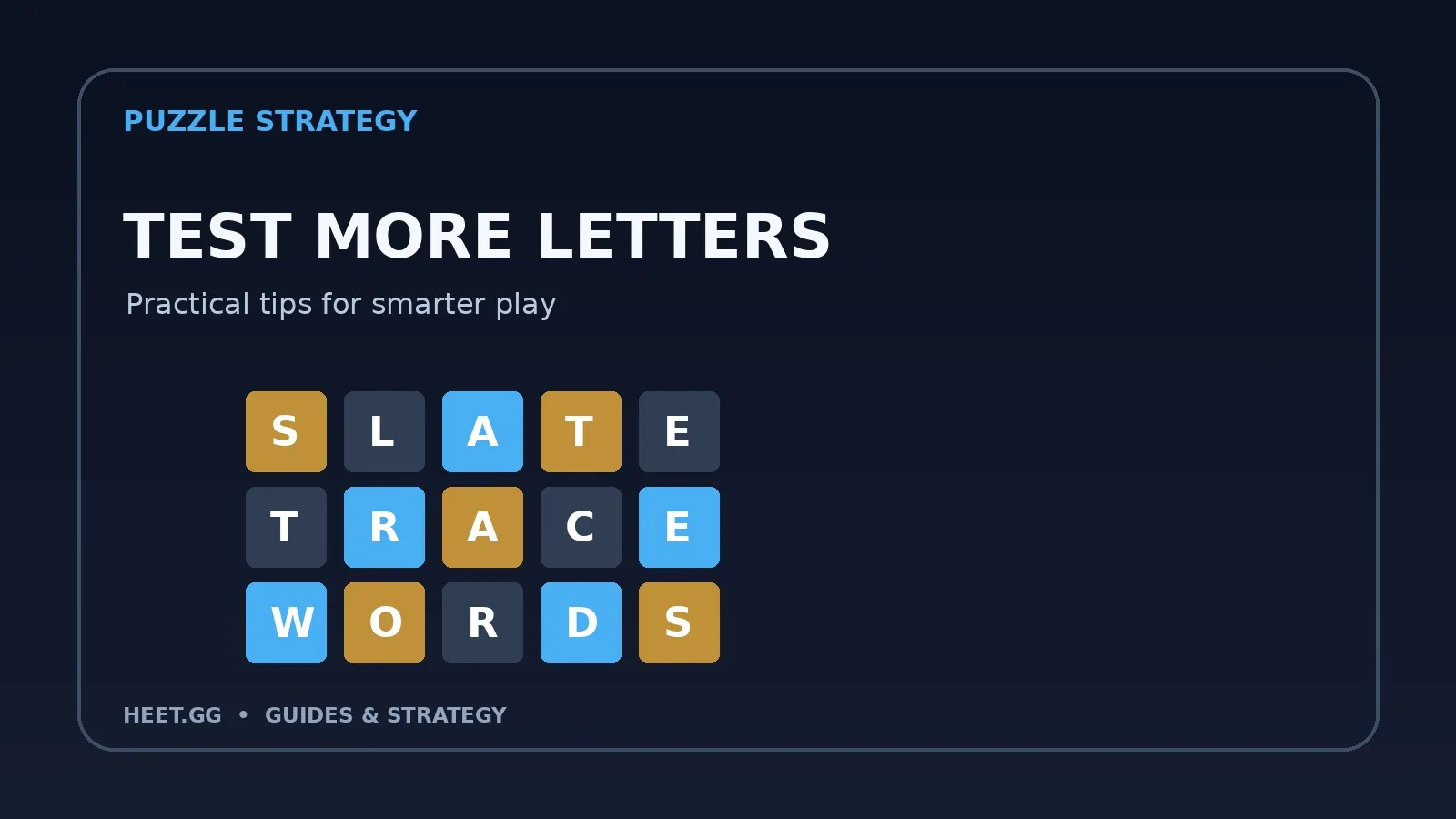
Before improving your strategy, understand what each color means.
- Green: The letter is correct and in the correct position.
- Yellow: The letter appears in the answer but belongs elsewhere.
- Gray: The letter isn't counted as present in that position or occurrence.
Repeated letters require special attention because the answer may contain fewer copies of a letter than your guess.
1. Choose a Balanced Starting Word
Your first guess should test several useful letters.
Words such as SLATE, CRANE, and TRACE contain common English letters without unnecessary repetition.
A strong opening guess should provide information rather than simply look like a likely answer.
There is no universally perfect starting word for every strategy.
2. Test Common Vowels Early
Knowing which vowels appear in the answer can help you recognize possible word structures.
A, E, I, O, and U are useful to investigate, but don't ignore Y, which can function as a vowel in many words.
Avoid testing the same excluded vowel repeatedly.
3. Eliminate Letters Systematically
Gray tiles reduce the number of possible answers.
Keep track of letters you've already eliminated and avoid using them again without a specific reason.
For example, if your first two guesses eliminate several common consonants, your next attempt should explore remaining possibilities.
4. Respect Yellow Letter Positions
A yellow letter belongs in the answer but not in its tested position.
If A appears yellow in the second position, don't place it there again.
This sounds obvious, but overlooking position restrictions is a common source of wasted guesses.
5. Prioritize Information
Not every guess needs to be a potential answer.
Sometimes testing several new letters is more valuable than guessing a word that matches only part of the available information.
Imagine several possible answers share the same ending.
An information-focused guess can help distinguish them before you commit.
6. Recognize Common Letter Patterns
English words frequently contain combinations such as:
- TH
- CH
- SH
- ST
- TR
- ING
- ER
Recognizing these patterns helps you identify possible answers.
However, always prioritize confirmed feedback over familiar spelling patterns.
7. Watch for Repeated Letters
Wordle answers can contain duplicate letters.
For example, a word might contain two copies of the same vowel or consonant.
When your guesses produce unexpected feedback, consider whether letter repetition explains the result.
Don't assume every answer contains five unique letters.
8. Avoid the Similar-Word Trap
Suppose you have several candidates that differ by only one letter.
Guessing them individually may consume your remaining attempts.
In normal mode, you can sometimes submit another word containing several distinguishing letters.
That approach may eliminate multiple candidates simultaneously.
Hard Mode restricts this flexibility because revealed hints must be used.
9. Use Green Letters as Anchors
Green tiles reveal confirmed positions.
Treat these letters as fixed points around which you can build candidate words.
For example, if your answer begins with S and ends with E, focus on valid patterns that fit those positions.
Remember to check all previous yellow and gray feedback as well.
10. Slow Down Near the End
Early guesses can focus on exploration.
Later guesses should focus on realistic solutions.
Before submitting your fifth or sixth attempt, verify that your candidate:
- Contains every confirmed letter.
- Places green letters correctly.
- Respects yellow-letter restrictions.
- Doesn't conflict with eliminated letters.
- Handles repeated letters correctly.
A brief review can prevent avoidable mistakes.
11. Learn From Failed Puzzles
When you fail to solve a puzzle, examine your decisions.
Did you repeat an excluded letter?
Did you overlook a possible duplicate?
Did you waste guesses on similar candidates?
Understanding why a puzzle went wrong is more valuable than simply memorizing its answer.
12. Practice Different Word Games
Other puzzles can expose you to unfamiliar vocabulary and word structures.
Crosswords improve clue interpretation, while anagrams encourage flexible letter recognition.
Is Wordle Hard Mode Better?
Hard Mode requires you to use revealed hints in subsequent guesses.
This encourages disciplined play but can make certain answer patterns harder to resolve.
Normal mode allows greater flexibility for testing new letters.
Neither mode is inherently superior. Choose the one that matches your preferred challenge.
Frequently Asked Questions
What is the best starting word in Wordle?
Words containing common letters and multiple useful vowels are reasonable choices. The best opener depends on your overall guessing strategy.
Is Wordle based on luck?
Luck affects the feedback you receive, especially early in a puzzle. Strategy determines how efficiently you use that feedback.
Can Wordle have repeated letters?
Yes. Answers may contain duplicate letters, making careful interpretation of tile colors important.
How do I solve Wordle in fewer guesses?
Focus on elimination, position restrictions, and distinguishing between similar possible answers.
Final Thoughts
Getting better at Wordle isn't about finding one secret trick.
It's about making every guess count.
Start with useful letters, track the feedback, recognize patterns, and avoid rushing when several answers remain.
Consistent, thoughtful practice is a more reliable approach than chasing lucky guesses.