Pros and Cons of Video Games and Violence: An Analytical Breakdown
Do violent video games cause aggression? Explore the scientific evidence, cognitive benefits, potential risks, and what parents and gamers should know.

Examining the Video Game Violence Debate
Do violent video games make people more aggressive? Can gaming improve cognitive skills? And should parents be concerned about the violent content found in popular titles such as Call of Duty, Grand Theft Auto, and Mortal Kombat?
The relationship between video games and violence has been debated for decades. Researchers have investigated everything from short-term frustration and aggressive thoughts to long-term behavioral development, empathy, and serious real-world violence.
The results are more complicated than either side of the debate sometimes suggests.
Some studies identify small associations between gaming and aggressive behavior. Others find little evidence that playing violent games directly causes lasting changes in aggression. Meanwhile, research also points to potential benefits involving attention, problem-solving, and social interaction.
The central distinction is that aggression and serious violence are not the same thing.
In this guide, HEET.GG examines the advantages and disadvantages of violent video games, what current research actually supports, and how gamers and parents can make informed decisions.
Quick Answer: Do Violent Video Games Cause Violence?
There is insufficient scientific evidence to conclude that violent video games cause serious real-world violence, including violent crime or mass shootings.
That does not mean gaming has no behavioral effects.
Some research identifies small associations between violent game exposure and aggression-related outcomes, such as hostile thoughts, verbal aggression, or confrontational behavior.
However, researchers disagree about the size, consistency, and causal interpretation of these associations.
The American Psychological Association (APA) clarified in 2020 that its research should not be used to attribute serious acts of violence to video games.
A 2024 longitudinal study of more than 3,000 Czech adolescents also found no evidence for its hypothesized within-person desensitization effects on aggression and empathy.
On the other hand, a 2026 systematic review and meta-analysis in JAMA Pediatrics reported modest associations between video gaming and aggression-related outcomes, alongside small positive associations with attention and executive functioning.
The most accurate conclusion is therefore nuanced: video games may be associated with certain behavioral outcomes, but a simple claim that violent games produce violent people is not supported by the evidence.
Pros and Cons of Video Games and Violence: Overview
| Potential Benefits | Potential Concerns |
|---|---|
| Practice with attention and visual tracking | Possible associations with aggressive thoughts or behavior |
| Strategic decision-making and problem-solving | Frustration and emotional escalation during competitive play |
| Cooperative teamwork and communication | Exposure to age-inappropriate themes |
| Social connection through multiplayer games | Toxic chat, harassment, and hostile interactions |
| Entertainment and relaxation | Sleep disruption from late-night sessions |
| Opportunities to discuss fictional violence critically | Excessive gaming interfering with everyday responsibilities |
These are potential outcomes, not guarantees. The effects depend on the individual, the game, the social environment, and the way gaming fits into daily life.
The Pros: Potential Benefits of Video Games
1. Attention and Cognitive Skills
Many video games require players to monitor multiple visual elements, react to changing conditions, and make rapid decisions.
Fast-paced action games may provide practice in visual attention, spatial processing, and task switching.
For example, a competitive shooter can require players to track opponents, remember map locations, monitor ammunition, and communicate with teammates simultaneously.
However, being good at these tasks inside a game does not automatically prove that the benefits transfer to school performance or everyday decision-making.
The strength and generalizability of cognitive improvements depend on the study and the particular skill being measured.
2. Problem-Solving and Strategic Thinking
Games frequently place players in situations where they must evaluate options under pressure.
A tactical multiplayer game may involve decisions about positioning, resources, and timing.
Strategy games can require longer-term planning, adaptation, and resource management.
These experiences provide opportunities to practice structured thinking.
Still, it is important to distinguish between becoming better at a game and demonstrating measurable improvements in broader cognitive abilities.
3. Teamwork and Social Connection
Multiplayer games can create opportunities for cooperation.
In games such as Counter-Strike 2 or Valorant, teams must exchange information, coordinate tactics, and adapt to unexpected situations.
For some players, gaming is also an important way to maintain friendships.
These social benefits are not exclusive to violent games. They are often associated with multiplayer design and shared experiences rather than violent content itself.
4. Entertainment and Emotional Relaxation
Many people play games to unwind after work or school.
A familiar game can provide enjoyment, distraction, and a sense of accomplishment.
However, the popular claim that violent games safely release aggression through "catharsis" is not established as a reliable psychological mechanism.
For some people, competitive gaming may improve their mood. For others, a frustrating session can temporarily increase stress.
The effect depends on the player and the circumstances.
The Cons: Potential Risks of Violent Video Games
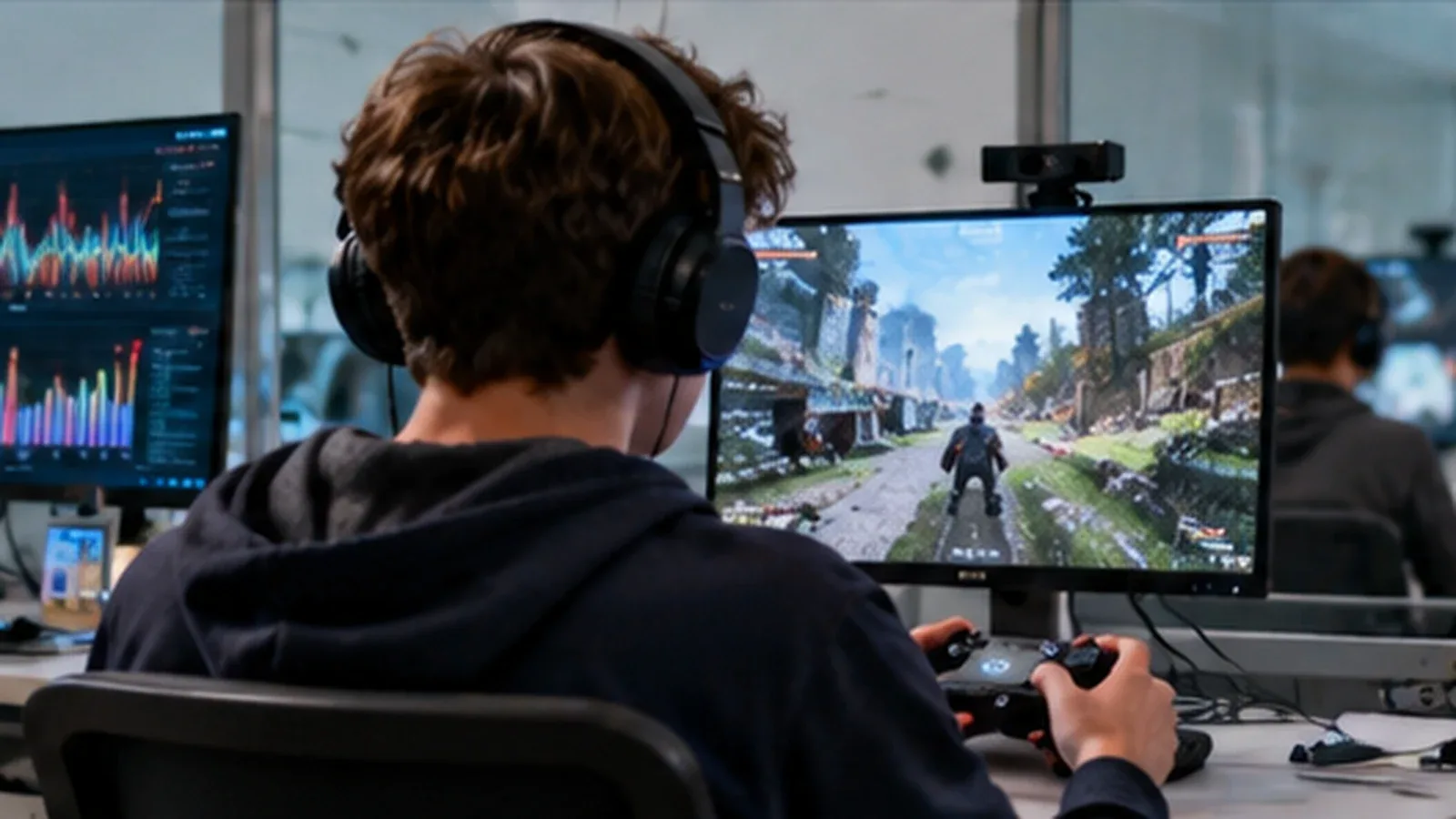
1. Aggressive Thoughts and Behavior
This is the most debated issue.
Some studies have reported associations between exposure to violent video games and measures of aggression.
However, researchers use different definitions of aggression.
These can include:
- Aggressive thoughts
- Self-reported anger
- Verbal hostility
- Laboratory measures of aggressive responses
- Physical aggression
- Criminal violence
These outcomes should not be treated as interchangeable.
A temporary increase in irritation after losing a competitive match is not equivalent to committing a violent crime.
In 2020, a reanalysis of research considered by the APA found negligible relationships for some aggressive behavior measures and argued that earlier conclusions required more caution.
Meanwhile, a 2026 meta-analysis reported a modest positive association between video gaming and aggression, with a correlation of approximately 0.16.
Such findings warrant attention, but correlation alone does not establish causation.
2. Competitive Frustration and Toxicity
One important distinction is that violent content and competitive pressure are separate factors.
A player can become frustrated during a nonviolent sports game, racing game, or puzzle game.
Similarly, a violent single-player game may be experienced calmly.
Ranked multiplayer systems introduce additional stressors, including:
- Fear of losing rank
- Harassment from teammates
- Repeated defeats
- Pressure to perform
- Long sessions without breaks
Competitive intensity may therefore influence emotional responses independently of whether a game depicts violence.
3. Age-Inappropriate Content
Not every game is suitable for every age group.
Games may contain graphic violence, disturbing imagery, strong language, or mature themes.
Age-rating systems help parents understand the content they are considering.
In North America, the ESRB provides age ratings and content descriptors.
In much of Europe, PEGI uses age categories including 3, 7, 12, 16, and 18.
These ratings describe content suitability; they do not predict whether an individual child will become aggressive.
4. Sleep and Excessive Gaming
The risks associated with gaming are not limited to violent content.
Late-night sessions may interfere with sleep when they delay bedtime or make it difficult to disengage.
Insufficient sleep can affect concentration, mood, and daily functioning.
Gaming may also become problematic when it consistently displaces schoolwork, physical activity, relationships, or other responsibilities.
The relevant concern is not simply how many hours someone plays, but whether gaming causes meaningful impairment.
What Scientific Research Says About Gaming and Aggression
To understand the debate, it helps to compare several influential findings.
American Psychological Association: 2020
The APA warned against using violent video games as a simplistic explanation for serious violence.
It acknowledged research linking violent game exposure with some aggression-related outcomes, but emphasized that this should not be interpreted as evidence that gaming causes mass shootings or other serious violent acts.
Ferguson, Copenhaver and Markey: 2020
A reanalysis of the APA's earlier evidence found negligible relationships for some measures of aggressive and prosocial behavior.
The authors raised concerns about methodological choices and argued for a more cautious interpretation of the literature.
Lacko, Machackova and Smahel: 2024
This longitudinal study followed 3,010 Czech adolescents across four waves.
Although certain between-person associations were observed, the researchers found no statistically significant within-person desensitization effects of violent game exposure on aggression or empathy.
This distinction matters because differences between individuals do not necessarily demonstrate that changes in gaming exposure cause changes in behavior.
JAMA Pediatrics: 2026
A systematic review and meta-analysis of longitudinal digital-media research reported that video gaming was associated with greater aggression and externalizing behavior.
It also found a small positive association with attention and executive functioning.
These results reinforce the need for balanced interpretation rather than claiming that gaming is universally harmful or beneficial.
Why Correlation Does Not Prove Causation
Suppose researchers find that adolescents who play more violent video games also report more aggressive behavior.
Several explanations are possible.
One possibility is that game exposure influences behavior.
Another is that people with more aggressive tendencies prefer certain games.
A third possibility is that other factors influence both gaming preferences and behavior.
Researchers must consider variables such as family environment, existing behavioral difficulties, social relationships, and individual personality differences.
Longitudinal studies can help examine how behavior changes over time, but even they do not automatically establish causation.
This is why sweeping headlines about video games causing violence can misrepresent what the research actually demonstrates.
Are Violent Video Games More Dangerous for Children?
Children and adolescents differ in emotional development, maturity, and sensitivity to disturbing content.
That makes age-appropriate game selection important.
However, age alone does not determine how someone will respond to a particular game.
Parents should consider the game's content, the child's reactions, the social environment, and whether gaming affects daily routines.
A child who becomes consistently distressed after playing may need different boundaries from one who enjoys a game without noticeable problems.
The goal should be informed supervision rather than assuming every violent game produces the same effect.
Practical Recommendations for Parents and Gamers

For Parents
- Check age ratings. Review ESRB or PEGI ratings and content descriptors before purchasing.
- Understand the actual game. Watch gameplay or play together instead of judging only by the title.
- Discuss fictional violence. Ask how the child interprets the characters, actions, and consequences.
- Use parental controls. Manage communication features, purchases, and access where appropriate.
- Protect sleep and routines. Agree on reasonable boundaries around school nights and bedtime.
- Watch for meaningful changes. Persistent distress, withdrawal, or problems at school deserve attention regardless of the game being played.
For Gamers
- Take breaks when frustration starts affecting your decisions.
- Mute or report abusive players rather than escalating arguments.
- Avoid sacrificing sleep to finish one more ranked match.
- Balance competitive gaming with other activities.
- Choose games based on enjoyment, not only social pressure.
- Recognize when a game is no longer helping you relax.
The HEET.GG Context Checklist
When evaluating whether a game is suitable for someone, consider five questions:
| Question | Why It Matters |
|---|---|
| What kind of violence does the game depict? | Cartoon action differs from realistic graphic violence |
| How old and mature is the player? | Content suitability varies by developmental stage |
| Is the experience competitive or cooperative? | Social pressure may influence frustration |
| How does the player react afterward? | Individual responses matter |
| Does gaming interfere with daily life? | Functional impact is more important than assumptions |
This checklist is a practical editorial tool, not a clinical screening instrument.
It encourages decisions based on context instead of treating all games and players alike.
Frequently Asked Questions
Do violent video games cause aggressive behavior?
Some studies report small associations between violent game exposure and aggression-related outcomes. Researchers continue to debate causality, effect size, and consistency across different methods.
Do violent video games cause mass shootings?
There is insufficient scientific evidence to establish a causal link. The American Psychological Association explicitly cautions against attributing serious violence to video gaming.
Can video games improve brain function?
Certain games may help players practice attention, spatial processing, and decision-making. Research also reports small positive associations with attention and executive functioning, but improvements do not necessarily transfer to every real-world task.
Are violent video games bad for teenagers?
Not automatically. Suitability depends on age, content, individual reactions, and whether gaming interferes with sleep, education, or relationships.
Can violent video games reduce stress?
Some players find gaming relaxing, but competitive frustration can have the opposite effect. There is no strong basis for assuming that violent gameplay reliably releases aggression.
Are multiplayer games more harmful than single-player games?
There is no simple universal answer. Multiplayer games introduce social interaction and competitive pressure, while single-player games vary widely in content and emotional intensity.
What is more important: game violence or screen time?
Both can matter, but neither should be considered in isolation. Sleep, game content, player wellbeing, social interactions, and everyday functioning all provide useful context.
Are Violent Video Games Good or Bad?
Video games are not a single, uniform experience.
They include competitive shooters, narrative adventures, cooperative games, strategy titles, and countless other genres.
Research suggests that gaming can be associated with both potential benefits and potential risks.
Some studies identify modest links with aggression-related outcomes. Others challenge whether these findings demonstrate meaningful causal effects.
Most importantly, evidence about aggressive thoughts or behavior should not be misrepresented as proof that video games cause serious criminal violence.
For parents, the best approach is to consider age ratings, communication, emotional responses, and healthy routines.
For players, the priority should be enjoying games without allowing them to undermine sleep, relationships, or daily responsibilities.
The question is not simply whether video games contain violence. It is how games are played, who is playing them, and what happens beyond the screen.
TnT_Jimmy
VerifiedEsports Editorial Contributor
Verified strategy contributor at HEET.GG analyzing tier-1 pro esports tournament metas, player mechanics, and tactical execution for GENERAL.
Every tactical guide and breakdown undergoes rigorous peer review against live game engine patches before publication.
Related Playbooks & Strategy Guides
Tactical deep-dives for GENERAL


