How to Solve Crossword Puzzles Faster: 12 Beginner Tips
Learn how to solve crossword puzzles faster with 12 practical tips covering clues, common patterns, crossing letters, and solving techniques.
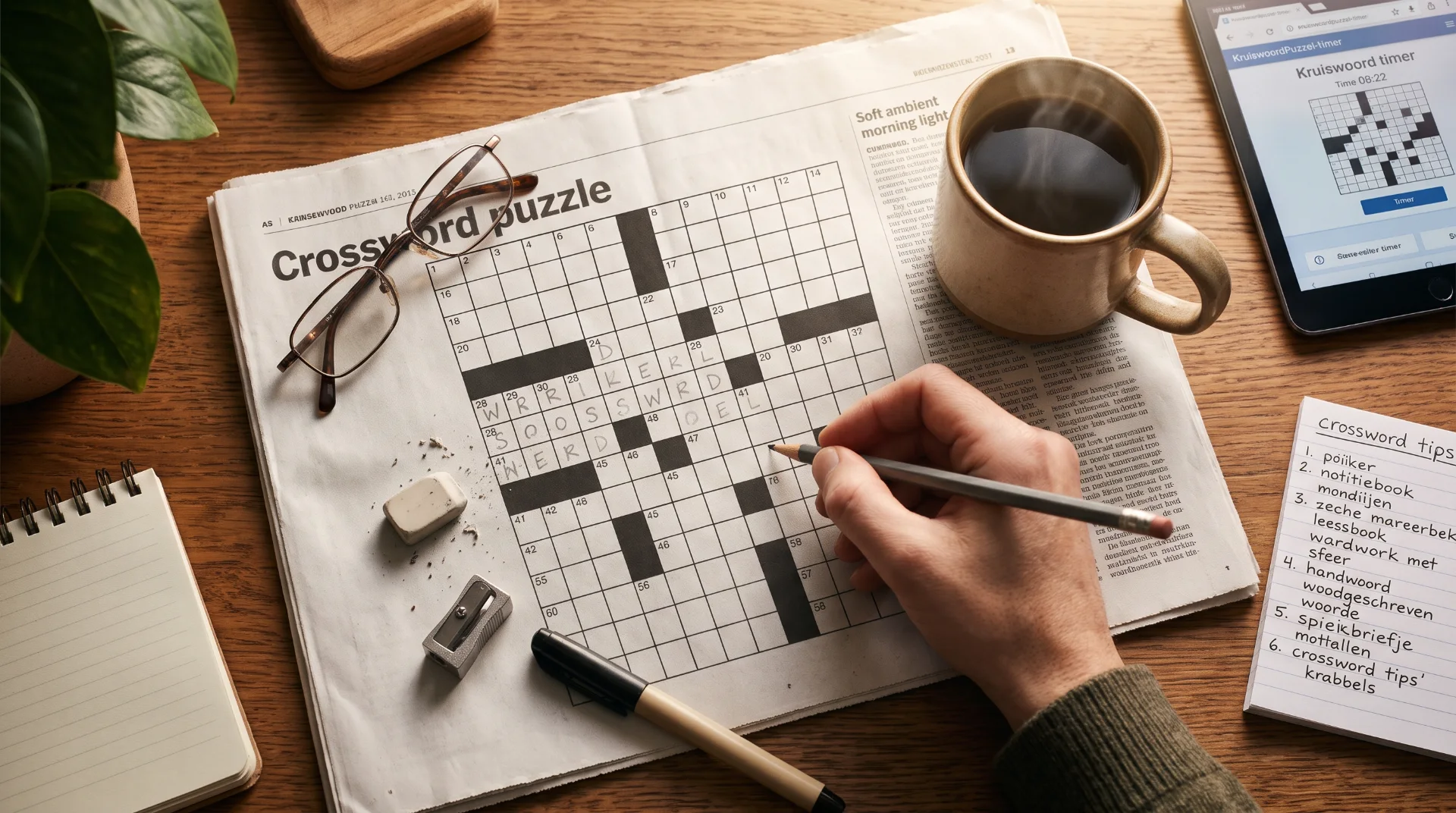
How to Solve Crossword Puzzles Faster: 12 Tips for Beginners
Crossword puzzles combine vocabulary, general knowledge, and logical thinking.
They can be frustrating when a clue seems impossible, but experienced solvers know that success isn't always about knowing the answer immediately.
It's about using the grid, recognizing patterns, and making progress wherever possible.
If you want to learn how to solve crossword puzzles faster, these 12 strategies can help you become a more confident solver.
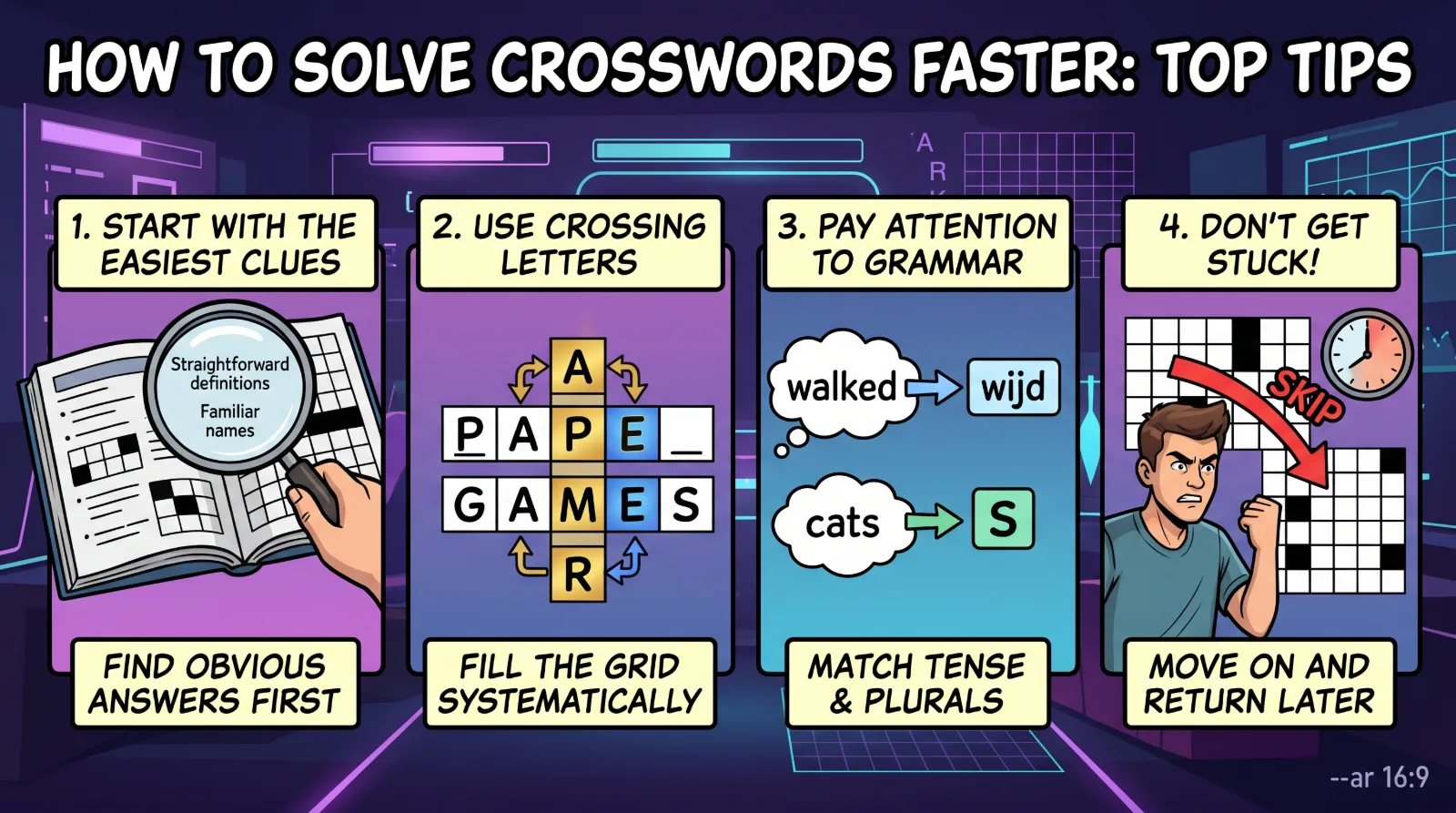
1. Start With the Easiest Clues
Don't begin by struggling with the first clue.
Scan the puzzle and answer anything you immediately recognize.
Straightforward definitions, familiar names, and obvious phrases are good starting points.
Every correct answer gives you crossing letters that can help solve more difficult clues.
2. Use Crossing Letters
Crossing letters are one of the most valuable features of crossword puzzles.
Suppose a five-letter answer has the pattern:
_ A _ E _
The available letters reduce the number of possible solutions.
Instead of guessing randomly, consider words that match both the clue and the pattern.
A few confirmed crossing letters can turn a difficult clue into an easy one.
3. Recognize Common Crossword Clue Types
Crossword clues often follow recognizable conventions.
Common types include:
- Direct definitions.
- Synonyms.
- Abbreviations.
- Fill-in-the-blank phrases.
- Wordplay.
- Cultural references.
Learning these patterns makes future puzzles easier.
4. Pay Attention to Grammar
The grammar of a clue often matches its answer.
A plural clue may require a plural answer.
A past-tense clue may suggest a past-tense verb.
For example, a clue ending in "walked" might point toward an answer describing an action in the past.
Grammar isn't an absolute guarantee, but it provides useful guidance.
5. Look for Common Endings
English words frequently use recognizable endings.
Examples include:
- -ED
- -ER
- -ING
- -TION
- -LY
If crossing letters reveal part of a familiar suffix, consider whether the answer might use that structure.
Always verify that the complete word matches the clue.
6. Learn Common Crossword Vocabulary
Some short words appear frequently in crossword puzzles because their letters fit easily into grids.
Over time, you'll recognize recurring abbreviations, common expressions, and short vocabulary.
You don't need to memorize huge word lists immediately.
Instead, review unfamiliar answers after completing each puzzle.
7. Don't Get Stuck on One Clue
One of the biggest beginner mistakes is spending too much time on a single answer.
If a clue isn't making sense, move elsewhere.
Solve another section and return when you have more crossing letters.
This approach keeps you making progress.
8. Consider Multiple Meanings
Crossword clues often exploit words with several meanings.
For example, "bank" might refer to a financial institution or the side of a river.
When your first interpretation doesn't fit, consider alternatives.
The correct answer must satisfy both the clue and the grid.
9. Watch for Abbreviations
A clue containing an abbreviation may indicate that the answer is also abbreviated.
For example, a clue referencing a U.S. state might require its postal abbreviation rather than the full name.
Recognizing this convention can save time.
10. Use Pencil-Style Thinking
Even when solving digitally, treat uncertain answers as temporary.
Avoid becoming attached to your first guess.
If crossing letters create impossible combinations, revisit the questionable entries.
Flexible thinking is essential because one incorrect answer can disrupt an entire section.
11. Practice With Smaller Crosswords
Mini crosswords are excellent starting points.
Their compact grids provide opportunities to practice clue interpretation without committing to a large puzzle.
Once you're comfortable, gradually attempt larger grids.
12. Review Completed Puzzles
After finishing, revisit the clues you found difficult.
Ask yourself:
- Was the answer an unfamiliar word?
- Did the clue use an unexpected meaning?
- Was there an abbreviation?
- Could crossing letters have helped sooner?
- Did I overlook a grammatical hint?
This review helps you recognize similar patterns in future puzzles.
How to Approach a Crossword Step by Step
A useful solving routine looks like this:
- Scan all Across clues.
- Fill in obvious answers.
- Move to the Down clues.
- Use crossing letters to solve uncertain entries.
- Revisit clues with partial answers.
- Check that every crossing word makes sense.
- Review the completed grid for mistakes.
This approach is more reliable than trying to solve every clue in numerical order.
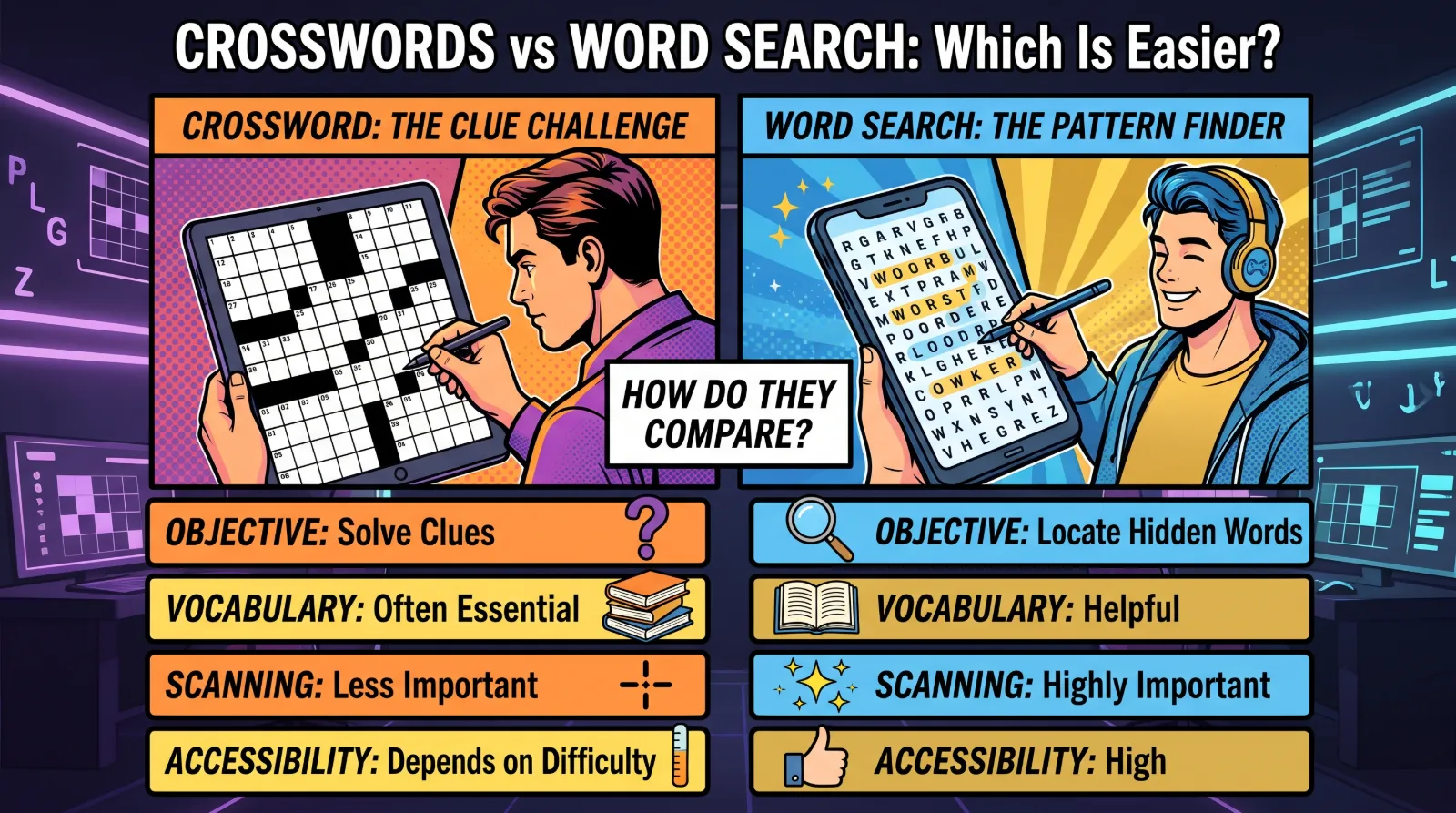
Crossword vs Word Search: Which Is Easier?
Word searches focus on finding known words hidden inside a letter grid.
Crosswords require you to identify answers from clues.
For beginners, word searches may feel more accessible because they involve less vocabulary interpretation.
However, crosswords become easier as you learn common clue patterns.
Frequently Asked Questions
How do beginners get better at crosswords?
Start with easy puzzles, use crossing letters, and review unfamiliar clues after finishing.
Should I solve Across or Down clues first?
Either approach works. Many beginners benefit from scanning both directions and answering the easiest clues first.
Why do crossword clues seem misleading?
Clues may use multiple meanings, abbreviations, wordplay, or unusual interpretations.
Is it okay to use crossword hints?
Yes. Hints can help you learn unfamiliar conventions, especially when you're starting out.
Final Thoughts
Solving crossword puzzles faster isn't simply about knowing more words.
It's about using the information already available.
Start with easy clues, rely on crossing letters, recognize common patterns, and remain flexible when an answer doesn't fit.
With regular practice, difficult clues can become more familiar and the solving process more enjoyable.