Web3 Gaming & Digital Ownership: Why Major Publishers Resisted the Blockchain
Why did gamers reject NFTs while spending billions on Steam skins? Here is the complete breakdown of Web3 gaming economic models, interoperability myths, and how decentralized digital ownership is quietly finding its real use cases.
The Ownership Paradox: Deconstructing the Rise, Fall, and Evolution of Web3 Gaming
When major gaming executives heralded blockchain technology and non-fungible tokens (NFTs) as the inevitable future of interactive entertainment, they anticipated a wave of consumer enthusiasm. Instead, they were met with fierce community backlash, review bombings, and canceled roadmap projects across major AAA studios.
Yet, during that exact same timeframe, gamers spent over $4 billion trading virtual Counter-Strike weapon finishes, Roblox accessories, and FIFA card packs within closed publisher gardens.
Why did mainstream gamers reject the concept of "true digital ownership" while avidly participating in centralized in-game economies? Below is an engineering and economic analysis of Web3 gaming's core promises, the technical flaws of "interoperability," and where decentralized technology is finding viable niches.
Centralized Walled Gardens vs. Open Ledger Economies
To understand the tension, compare the structural architecture of traditional games against decentralized networks:
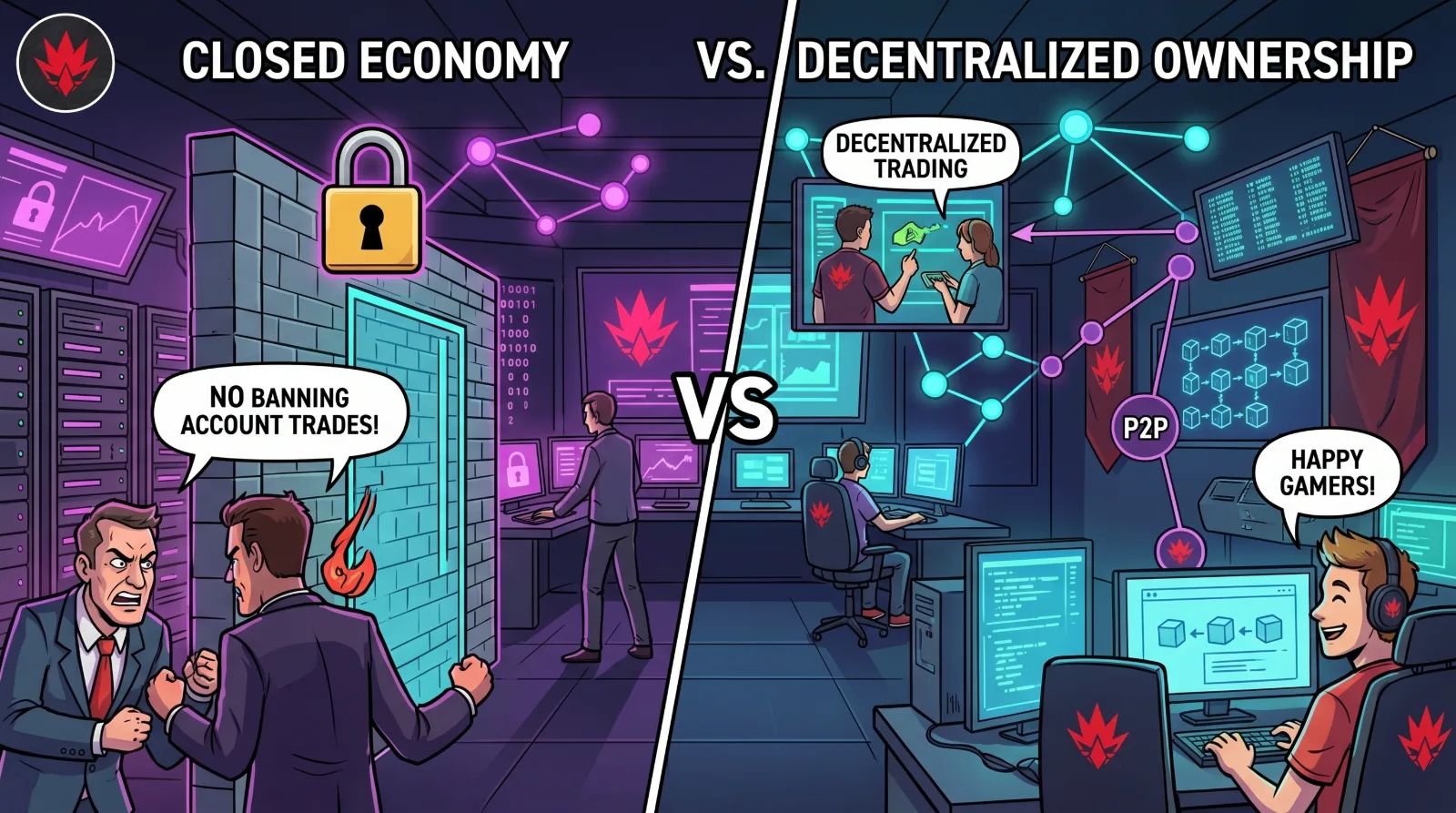
| Economic Pillar | Traditional AAA Games (Steam/Epic/EA) | Web3 Blockchain Models |
|---|---|---|
| Asset Custody | Stored on private publisher SQL databases. | Stored on decentralized blockchain contracts. |
| Account Ban Impact | Account ban terminates access to all purchases. | Private keys retain cryptographic token ownership. |
| Secondary Market | Publisher claims 10%–30% fee or bans trades entirely. | P2P trading via smart contracts with automated creator royalties. |
| Core Incentive | Intrinsic gameplay loop and personal entertainment. | Often distorted by speculative financial return ("Play-to-Earn"). |
The "Cross-Game Interoperability" Myth
The primary marketing promise of early Web3 gaming was that players could buy a virtual rifle in one game and use it seamlessly inside an entirely different franchise. To any 3D artist or game engine programmer, this claim was technically unviable:
- Engine Differences: An asset rigged for Unreal Engine 5’s skeletal bone hierarchy cannot simply render inside Unity without manual re-rigging, texture mapping, and physics recalibration.
- Competitive Balance: A weapon designed for a slow, tactical military sim would completely break the pacing, hitboxes, and time-to-kill balance of a fast-paced arena shooter.
- Publisher Incentives: Major publishers spend tens of millions building proprietary live-service universes; they have zero commercial incentive to render a competing studio's cosmetic assets inside their ecosystem for free.
The Real Evolution: Invisible Web3 Infrastructure
Where decentralized technology is actually succeeding is not in flashy speculative avatars, but in frictionless financial infrastructure:
- Peer-to-Peer Asset Escrow: Using smart contracts to conduct instant, trustless trades between players without relying on shady third-party intermediaries who can exit-scam with deposits.
- Decentralized Payment Gateways: Enabling international game developers to receive micro-transactions from players in emerging markets who lack access to international credit cards.
- Provably Verifiable Scarcity: Utilizing public ledgers to prove that an ultra-rare promotional drop truly has an immutable hard cap, eliminating silent developer stealth-dilution.
For users navigating this space, integrating secure Web3 wallets and authenticated custody tools represents a practical method to safeguard digital collectibles without exposing personal banking details.